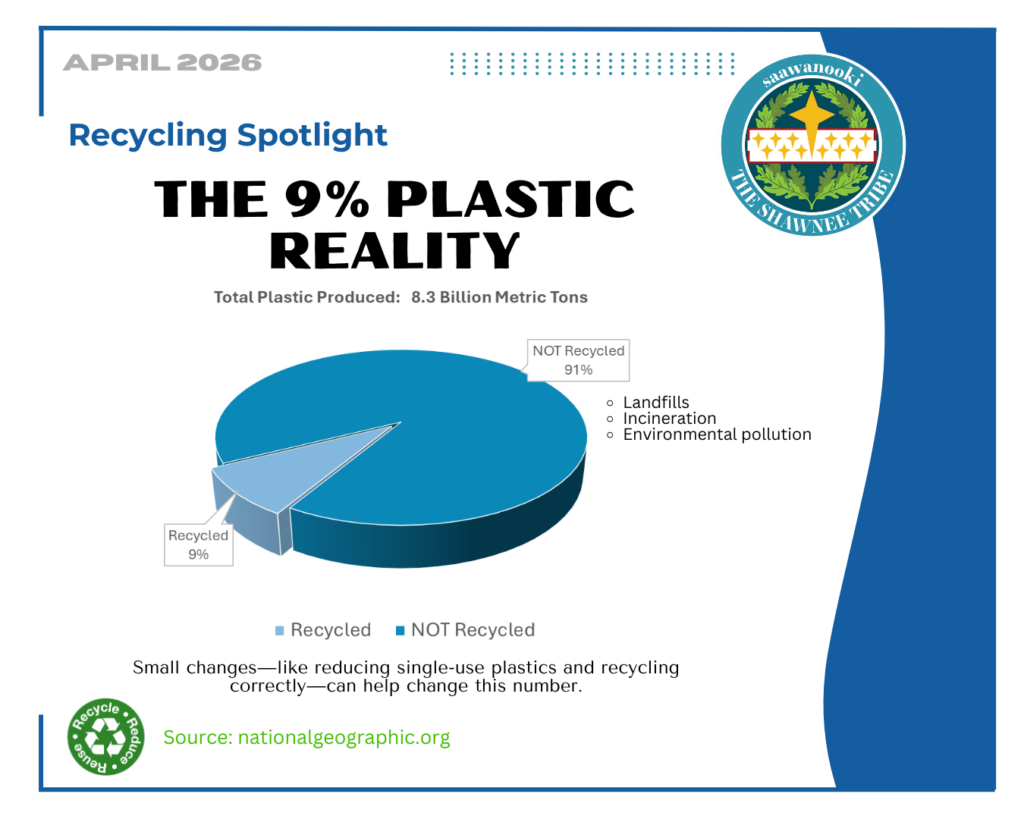
Plastic production has grown rapidly over the past 60 years, creating an estimated 8.3 billion metric tons of plastic—most of it used in disposable products that quickly become trash. Of that total, about 6.3 billion metric tons has already become waste.
Despite widespread recycling eaorts, only about 9% of plastic waste has been recycled. Around 12% has been incinerated, while the remaining 79% has accumulated in landfills or the natural environment, where it can persist for more than 400 years.
Scientists estimate that about 8 million metric tons of plastic enter the oceans every year, harming wildlife and ecosystems. If current trends continue, plastic waste in landfills could reach 12 billion metric tons by 2050.
Researchers say understanding the scale of the problem is essential for finding solutions. Reducing single-use plastics, improving recycling systems, and designing better materials will all play a role in addressing the global plastic waste challenge.
Small changes, like reducing single-use plastics and recycling correctly, can help change this number.