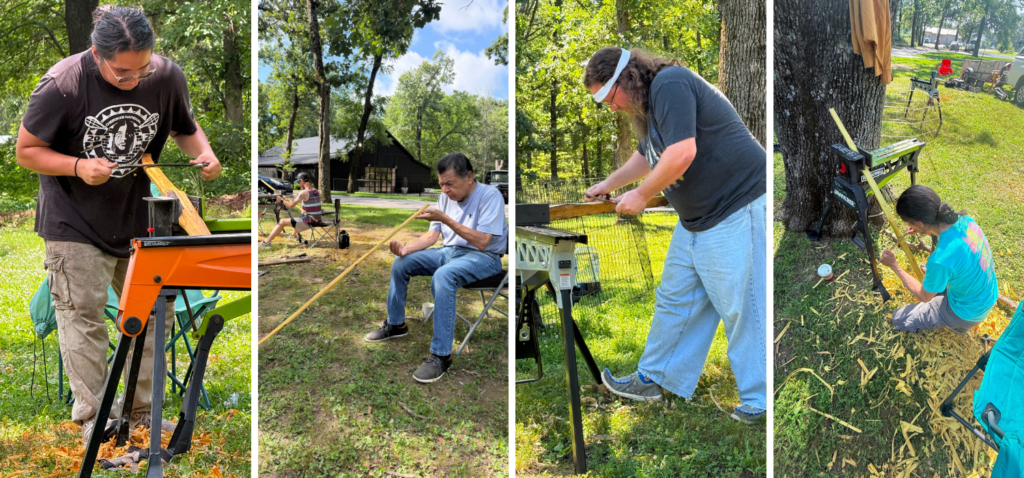
A traditional bow-making workshop recently brought together Shawnee youth and cultural instructors to share knowledge, skills, and values that have been passed down through generations.
The opportunity began when a request was made to teach Shawnee relatives the traditional craft of bow making. Having previously shared these skills with Muscogee participants, the instructors were honored to continue the tradition by working with Shawnee youth eager to learn.
Using staves of Osage orange—also known locally as bodark or hedge apple—the participants transformed raw pieces of wood into handcrafted bows. For the instructors, witnessing that transformation was nothing short of remarkable.
“Watching them take a raw stave and turn it into these beautiful bows is magic,” one instructor shared. “Being able to pass on this old tradition is a blessing.”
The knowledge being shared traces back to respected elders who dedicated their lives to preserving traditional practices. One instructor reflected on a promise made to a mentor before his passing—to continue teaching for as long as possible. That commitment remains a driving force behind the work today.
More than simply crafting bows, the workshop emphasized the cultural teachings connected to the process. Participants learned about the importance of respecting the natural world and maintaining a relationship with the land. Trees are not viewed merely as resources, but as relatives and living beings deserving of respect.
The harvesting process itself is approached ceremonially. Offerings are made, and gratitude is expressed before a tree is selected. In many Indigenous traditions, trees are referred to as the “Standing People” or the “Tree Nation,” reflecting their role as teachers and relatives within creation.
The instructors noted that these teachings cannot be fully understood through words alone. True understanding comes through participation—through working with the materials, learning by doing, and experiencing the process firsthand.
Perhaps most encouraging was the enthusiasm displayed by the young men participating in the workshop. Their interest in culture, traditions, and ancestral knowledge left a lasting impression on those teaching.
“When we lose touch with our ancestors and the things they teach us, we lose more than can ever be recovered,” the instructor reflected.
The workshop served as a reminder that cultural preservation depends on both those willing to teach and those eager to learn. Through experiences like traditional bow making, ancestral
knowledge continues to live on, ensuring future generations remain connected to their heritage, their communities, and the teachings of those who came before them.