
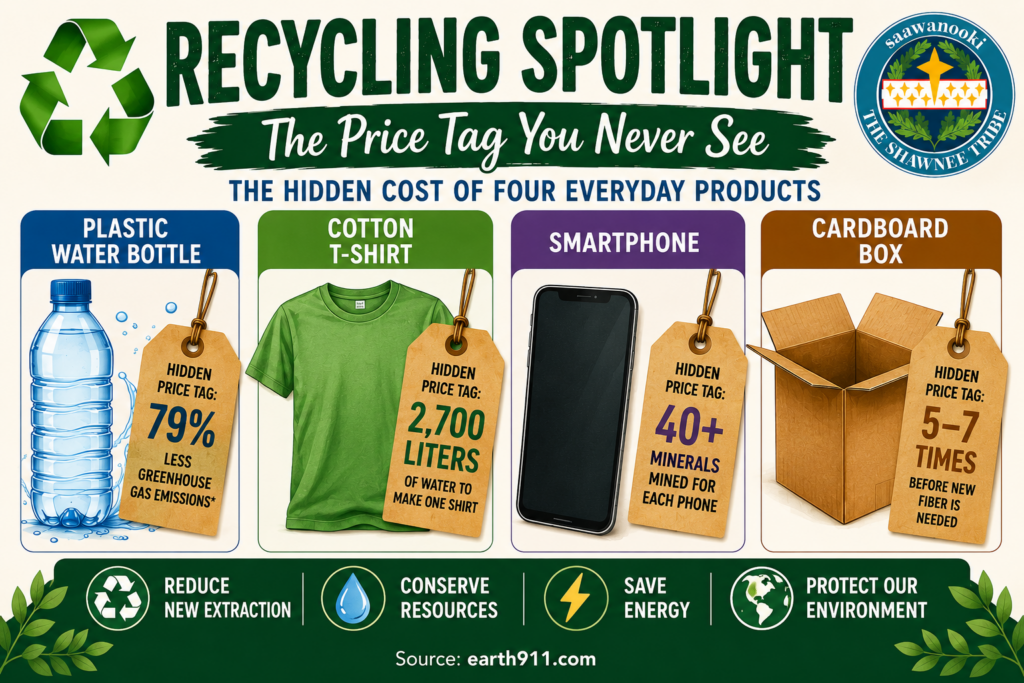
The Hidden Cost of Four Everyday Products
When we buy a product, we usually see only the price on the shelf. What we don’t see is the environmental cost of making it.
For example, it takes about 2,700 liters (713 gallons) of water to produce a single cotton T-shirt—about the same amount one person drinks over 3½ years. Long before that shirt reaches your closet, it has already required water, energy, farmland, transportation, and labor.
This is known as the virgin materials problem. Products made from new raw materials require mining, drilling, logging, farming, manufacturing, and shipping before they ever reach consumers. Recycling helps reduce the demand for these resource-intensive processes by giving existing materials a second life.
🧴 Plastic Water Bottle
A typical plastic water bottle is made from PET plastic, which is produced from petroleum and natural gas.
Manufacturing recycled PET instead of virgin plastic creates about 79% fewer greenhouse gas emissions, yet only about 30% of PET bottles are recycled in the United States. Most new bottles are still made primarily from brand-new plastic.
Why it matters: Every bottle recycled helps reduce the need for new oil extraction and lowers greenhouse gas emissions.
👕 Cotton T-Shirt
Cotton may be natural, but it is one of the most resource-intensive crops grown worldwide.
Growing cotton requires tremendous amounts of water, especially in dry regions. Producing recycled cotton uses about 79% less water than growing new cotton and also reduces carbon emissions.
Unfortunately, millions of tons of clothing are discarded every year, and most textiles still end up in landfills instead of becoming new fabric.
Why it matters: Buying fewer, higher-quality clothes and choosing garments made with recycled fibers helps conserve water and reduce waste.
📱 Smartphone
A smartphone contains more than 40 different minerals, including lithium, cobalt, gold, silver, copper, and rare earth elements.
Mining these materials requires large amounts of energy and can generate significant pollution. Although these valuable materials can often be recovered, only 15–20% of electronic waste is properly recycled worldwide.
Why it matters: Keeping your phone an extra two or three years can dramatically reduce the demand for new mining while conserving valuable natural resources.
📦 Cardboard Box
Cardboard is one of America’s greatest recycling success stories. Nearly 90% of corrugated cardboard is recovered for recycling.
However, paper fibers become shorter and weaker each time they’re recycled. After about five to seven recycling cycles, new wood fiber must be added to maintain the strength needed for shipping boxes.
Why it matters: Recycling cardboard remains extremely important, but reducing unnecessary packaging also helps conserve forests and natural resources.
🌎 What You Can Do
Small choices add up to a big difference.
- ♻️ Choose products made with recycled materials whenever possible.
- 👕 Buy quality clothing, wear it longer, and donate or recycle unwanted textiles.
- 📱 Extend the life of your electronics and recycle them through certified e-waste programs.
- 📦 Flatten and recycle clean, dry cardboard boxes.
- 🛍️ Support companies that clearly state their recycled content and use less packaging.
💚 Every Item Has a Story
The environmental impact of a product doesn’t begin when we throw it away—it begins when raw materials are taken from the Earth.
Every time we recycle, we’re helping reduce the need for new mining, drilling, logging, and farming. By choosing recycled products and recycling correctly, we conserve natural resources, save energy, reduce pollution, and help build a more sustainable future.
Remember: The best way to reduce waste isn’t just recycling—it’s reducing the need to create new materials in the first place.
Source: earth911.com