
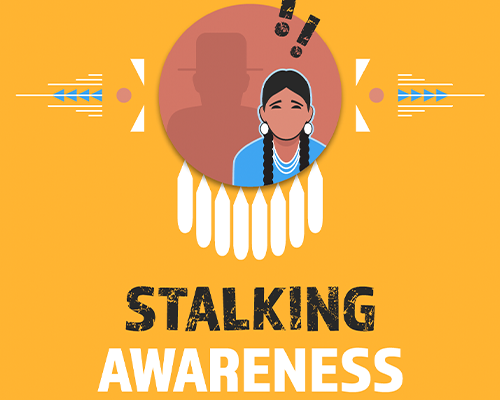
The Shawnee Tribe’s Behavioral Health Program is providing information in January for Stalking Awareness Month. Stalking is a serious and often misunderstood form of victimization. It involves a pattern of behaviors that would cause a reasonable person to fear for their safety or experience significant emotional distress. Stalking is not rare, and it is not harmless. Most victims know the person who is stalking them, and many experience threats, fear, and long-lasting impacts on their daily lives.
Research shows that stalking disproportionately affects American Indian and Alaska Native communities, with a significant percentage of women and men experiencing stalking at some point in their lives. Common stalking behaviors include monitoring, repeated unwanted contact, intimidation, and interference in a person’s work, relationships, or sense of safety. These behaviors often escalate over time rather than stop on their own.
If you or someone you know is experiencing stalking, help is available. Take the behavior seriously, trust your instincts, and prioritize safety. Consider limiting what you share online, documenting incidents in a stalking log, reaching out to trusted supports, and contacting law enforcement if you are in immediate danger. No one deserves to live in fear, and support resources exist to help individuals regain safety and control. If you feel like you are being staked and could be in danger, call your local law enforcement or 911.