Aug 31, 2026
RECYCLING SPOTLIGHT: BATTERIES
BATTERIES: Why batteries shouldn’t end up in landfills. Key Reasons to Avoid Disposing Batteries in Landfills:

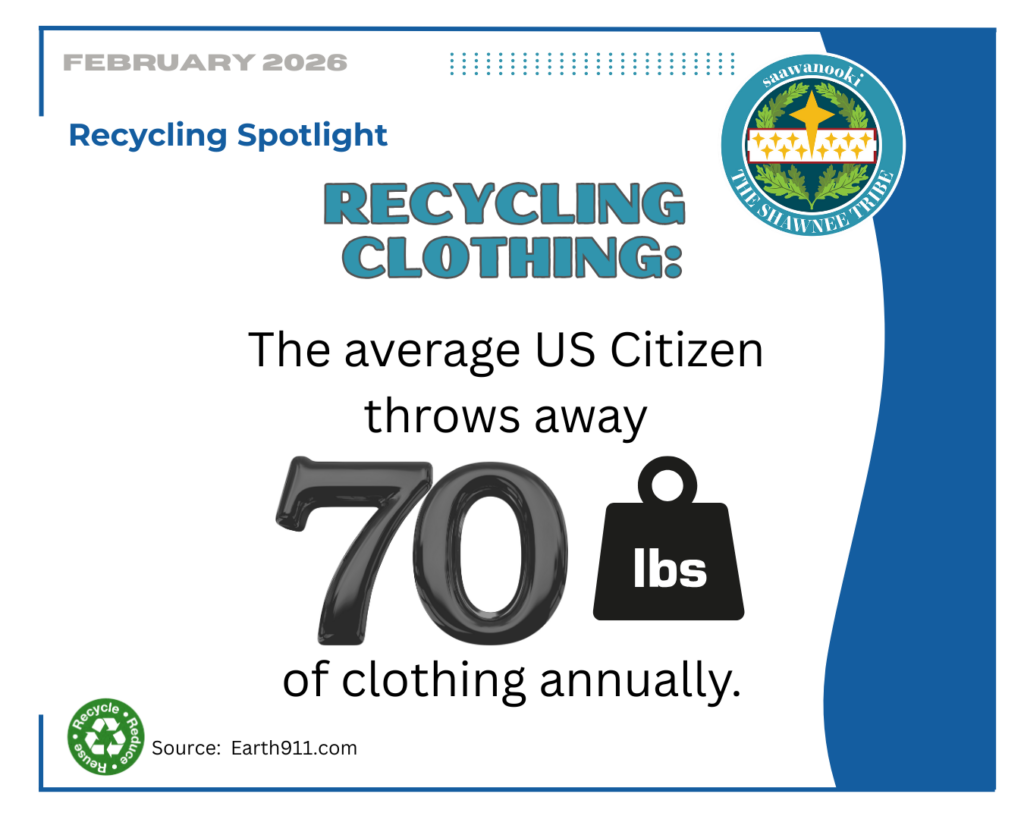
Did you know that the average US Citizen throws away an average of 70 lbs. of clothing annually? The fashion industry is a major contributor to global pollution, generating about 10% of annual CO₂ emissions. Reusing, donating, or recycling clothing helps reduce its environmental impact.
Clean Out Your Closet—Responsibly
Finished cleaning out your closet and wondering what to do with all those clothes? It matters more than you might think. The fashion industry is responsible for about 10% of global CO₂ emissions, and choosing reuse or recycling helps reduce its environmental impact.
Step 1: Sort It Out
Divide clothing and accessories into three groups:
Step 2: Reuse What You Can
Step 3: Donate Gently Worn Items
Step 4: Recycle What Can’t Be Worn
Step 5: Use Mail-In Recycling Options
No drop-ok nearby? Try these mail-in services:
Quick FAQs
Small choices in your closet can make a big difference for the planet.
Sources: Earth911.com
BATTERIES: Why batteries shouldn’t end up in landfills. Key Reasons to Avoid Disposing Batteries in Landfills:
The Shawnee Tribe is accepting public comments from tribal citizens about the Low Income Home Energy Program (LIHEAP) in preparation for next fiscal year, which begins October 1. All Shawnee households residing in the state of Oklahoma are encouraged to provide comments. Submit comments here through Monday, August 27, 2026. The LIHEAP program also still has funding […]
The Shawnee Tribe is proud to celebrate the accomplishments of Marina Staubus, whose artwork Whispers in the Wind earned First Place in the Painting category at the 2026 55th Annual Trail of Tears Art Show in Tahlequah, Oklahoma. Marina, a Shawnee Tribe citizen, continues a family tradition of service and dedication to the Tribe as the daughter of Mike Staubus, […]
A traditional bow-making workshop recently brought together Shawnee youth and cultural instructors to share knowledge, skills, and values that have been passed down through generations. The opportunity began when a request was made to teach Shawnee relatives the traditional craft of bow making. Having previously shared these skills with Muscogee participants, the instructors were honored […]
By David Pollack, A. Gwynn Henderson, and Edward R. Henry A people’s relationship to their homeland is dynamic. How they alter the landscape reflects their sense of place, their social relationships, and their connections to their ancestors. This is as true now as it was in the past. The North Elkhorn Creek Earthworks Around 500 […]
The Hidden Cost of Four Everyday Products When we buy a product, we usually see only the price on the shelf. What we don’t see is the environmental cost of making it. For example, it takes about 2,700 liters (713 gallons) of water to produce a single cotton T-shirt—about the same amount one person drinks […]
Mark McDowell, Treasurer and Keni Hood, Business Council Seat 7 have filed seeking re-election to their respective offices. The filing period for candidates has passed, with no additional candidates declaring their intention to run for office. Therefore, in accordance with Title 6, Sec. 6.20.080 of the Shawnee Election Act, both unopposed candidates are hereby deemed […]
YOUR CAN COULD BE BACK ON THE SHELF IN JUST 60 DAYS! You enjoy your beverage and recycle your aluminum can. Recycling trucks collect the cans and take them to a facility to be sorted. The cans are cleaned and shredded into small pieces. The aluminum pieces are melted down and rolled into large sheets. […]