Aug 31, 2026
RECYCLING SPOTLIGHT: BATTERIES
BATTERIES: Why batteries shouldn’t end up in landfills. Key Reasons to Avoid Disposing Batteries in Landfills:

Contributors: Coral Avery, Princella RedCorn
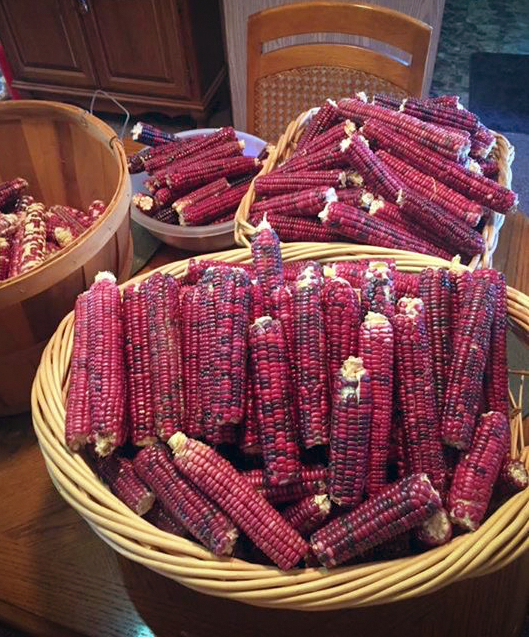
One of the most important crops grown in Shawnee villages before removal westward was lokhaana taami (flour corn). This corn variety, rich in vitamins and minerals, was used to make flour, which was instrumental in providing food for saawanooki (Shawnee people) through the winter months. It was also significant in ceremonial use. Historical displacement, paired with the impacts of climate change and cross-pollination, have resulted in years of failed attempts to grow lokhaana taami in Oklahoma as Shawnee ancestors would have known it in their time. The tribe has begun taking steps with university partners to cultivate this corn closer to the Shawnee homelands.
“Historically, when Shawnees were being removed, no one told our corn that it was to be moved (from the Ohio Valley) to Oklahoma,” said Chief Benjamin Barnes. “Shawnee corn was bred in Appalachia and along the waterways that feed the Ohio River, it was never meant to be grown in Oklahoma.”
Flour corn crops planted by the tribe in Oklahoma have been lost due to climate impacts, including extreme heat and flooding from frequent torrential rains during the spring planting. In 2023, northeast Oklahoma heat indexes rose to over 115 degrees Fahrenheit, causing significant health impacts to both our people and plant relatives. In December 2023, the Shawnee Tribe began discussing a collaboration with members of the Agriculture Department at the University of Illinois at Urbana-Champaign to assist in growing the Shawnee white flour corn in central Illinois, closer to its historic range. The tribe is hopeful about the future of collaborating with the University of Illinois. Beyond the white flour corn project, the University offers a Tribal Nations Scholarship providing in-state tuition for Native American students enrolled in any federally recognized tribe.
The tribe is also working with the Institute of Tribal Environmental Professionals (ITEP) and the Bureau of Indian Affairs Branch of Tribal Climate Resilience to share Shawnee stories and this university partnership in the second volume of the Status of Tribes and Climate Change (STACC) Report. Climate impacts and actions centering lokhaana taami will be featured in this national report to bring awareness to this issue and to raise concerns around tribal intellectual property when it comes to the genomic data of culturally significant seeds. An additional Shawnee narrative will be included in the report, centering on the Shawnee Language Immersion Program and discussing how language revitalization fosters tribal citizens’ relationships with cultural resources, including corn, and how those relationships have been impacted by colonization and climate change. It will focus on the role of Shawnee youth in rekindling these relationships and revitalizing the language for generations to come.
“Shawnee people have managed to maintain our cultural practices through adversity,” said Joel Barnes, Director of the Shawnee Language Immersion Program. “With the agriculture and climate issues of the past to present day, the fact we have our seedstock today shows the resilience of Shawnee people.”
Established in 1992 at Northern Arizona University, the Institute of Tribal Environmental Professionals (ITEP) works to strengthen tribal capacity and sovereignty in environmental management through culturally relevant education, research, partnerships and policy-based services. Upon publishing, the STACC report will be available on ITEP’s website and will serve as a useful tool for tribal nations to learn from one another and consider new partnerships and approaches to climate adaptation. It can also be a supporting document when applying for grants and other project resources to further climate adaptation and cultural preservation efforts.
A link to the full STACC Report will be available at shawnee-nsn.gov/news once it has been published by ITEP later this summer.

BATTERIES: Why batteries shouldn’t end up in landfills. Key Reasons to Avoid Disposing Batteries in Landfills:
The Shawnee Tribe is accepting public comments from tribal citizens about the Low Income Home Energy Program (LIHEAP) in preparation for next fiscal year, which begins October 1. All Shawnee households residing in the state of Oklahoma are encouraged to provide comments. Submit comments here through Monday, August 27, 2026. The LIHEAP program also still has funding […]
The Shawnee Tribe is proud to celebrate the accomplishments of Marina Staubus, whose artwork Whispers in the Wind earned First Place in the Painting category at the 2026 55th Annual Trail of Tears Art Show in Tahlequah, Oklahoma. Marina, a Shawnee Tribe citizen, continues a family tradition of service and dedication to the Tribe as the daughter of Mike Staubus, […]
A traditional bow-making workshop recently brought together Shawnee youth and cultural instructors to share knowledge, skills, and values that have been passed down through generations. The opportunity began when a request was made to teach Shawnee relatives the traditional craft of bow making. Having previously shared these skills with Muscogee participants, the instructors were honored […]
By David Pollack, A. Gwynn Henderson, and Edward R. Henry A people’s relationship to their homeland is dynamic. How they alter the landscape reflects their sense of place, their social relationships, and their connections to their ancestors. This is as true now as it was in the past. The North Elkhorn Creek Earthworks Around 500 […]
The Hidden Cost of Four Everyday Products When we buy a product, we usually see only the price on the shelf. What we don’t see is the environmental cost of making it. For example, it takes about 2,700 liters (713 gallons) of water to produce a single cotton T-shirt—about the same amount one person drinks […]
Mark McDowell, Treasurer and Keni Hood, Business Council Seat 7 have filed seeking re-election to their respective offices. The filing period for candidates has passed, with no additional candidates declaring their intention to run for office. Therefore, in accordance with Title 6, Sec. 6.20.080 of the Shawnee Election Act, both unopposed candidates are hereby deemed […]
YOUR CAN COULD BE BACK ON THE SHELF IN JUST 60 DAYS! You enjoy your beverage and recycle your aluminum can. Recycling trucks collect the cans and take them to a facility to be sorted. The cans are cleaned and shredded into small pieces. The aluminum pieces are melted down and rolled into large sheets. […]